Our Brands
Our Practice of “Implementing Questions”
Alongside our client-based co-creation projects, we also pursue another essential endeavor: the development of our own brands. Centered in Kameoka, Kyoto, these include the café no-mu (art & meals) and the hotel 6ishiki (art & sauna).
Here, we continually explore the question: “What does true richness mean?” Rather than limiting ourselves to supporting others, we test this possibility through our own daily practices—by shaping spaces, refining food, and reweaving human relationships. Each of these acts is, for us, an implementation of questions and a quiet proposal to society.
Our work is also an attempt to face—on a personal, ground-level scale—the pressing challenges of our time: climate change, the decline of agriculture, sustainability, food loss, the circular economy, population decline, aging demographics, and the increase of vacant houses. At Qe to Hare, we approach these not merely as “social issues,” but as entry points for new questions that open the latent potential of local communities and resources. Through food, space, culture, and management, we continue experimenting with re-editing the very ways we live and work.
Importantly, this approach is deeply inspired by the artistic discourses of Relational Art, Socially Engaged Art, and Social Sculpture. These practices form the conceptual backdrop for founder Eikoh Tanaka, who has consistently treated his entrepreneurial initiatives as an extension of his artistic practice. As an artpreneur, he develops these ventures not only as businesses, but also as sites of artistic experimentation—real-world arenas where art and society intersect to open new possibilities for collective transformation.
–
Qe to Hare Projects Featured on This Page Selected as Finalists in the “Local Innovation” Category of the Inaugural “ART & BUSINESS AWARD 2025” Hosted by Japan’s Ministry of Economy, Trade and Industry and Forbes JAPAN (PR TIMES link)
6ishiki art & sauna
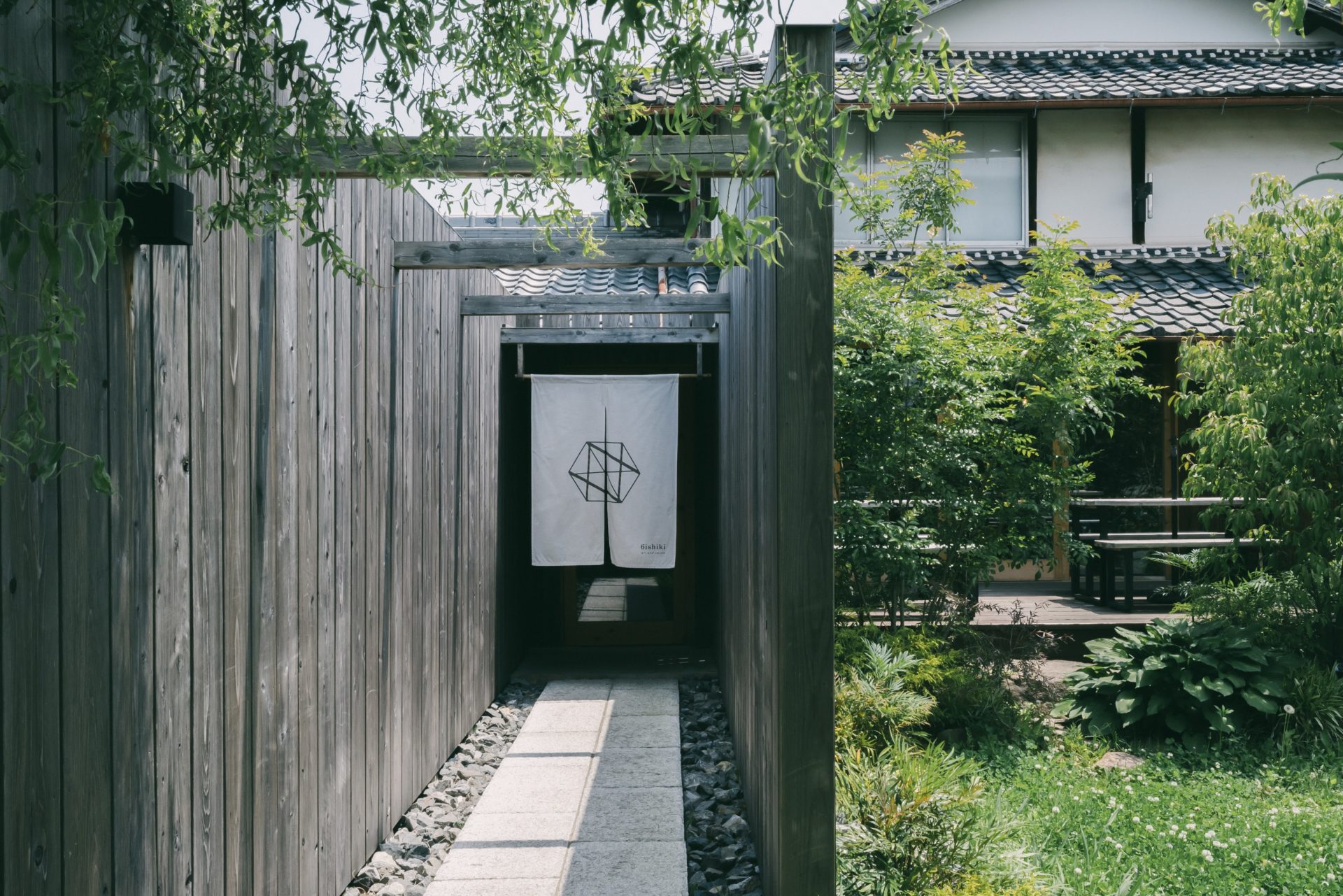
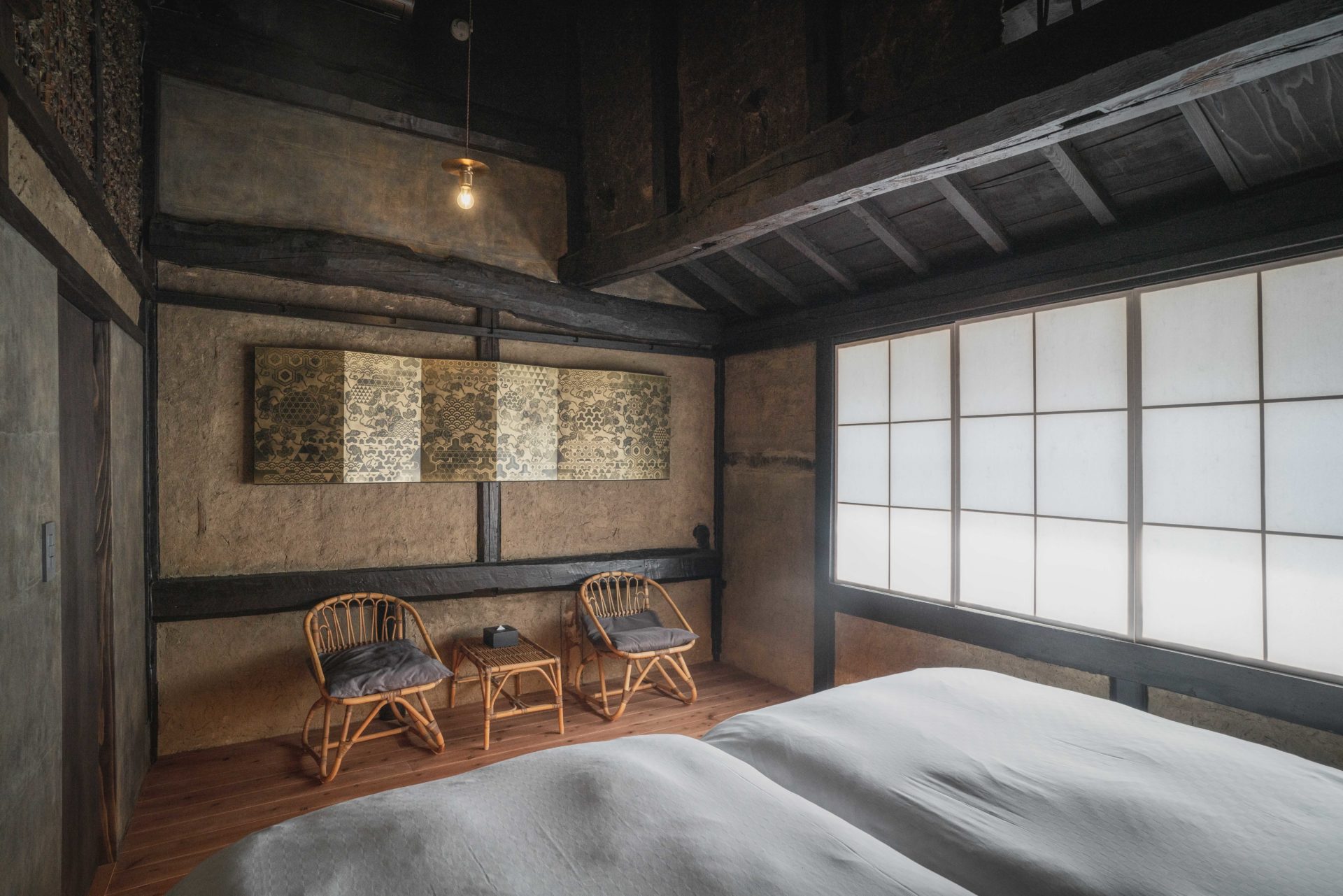
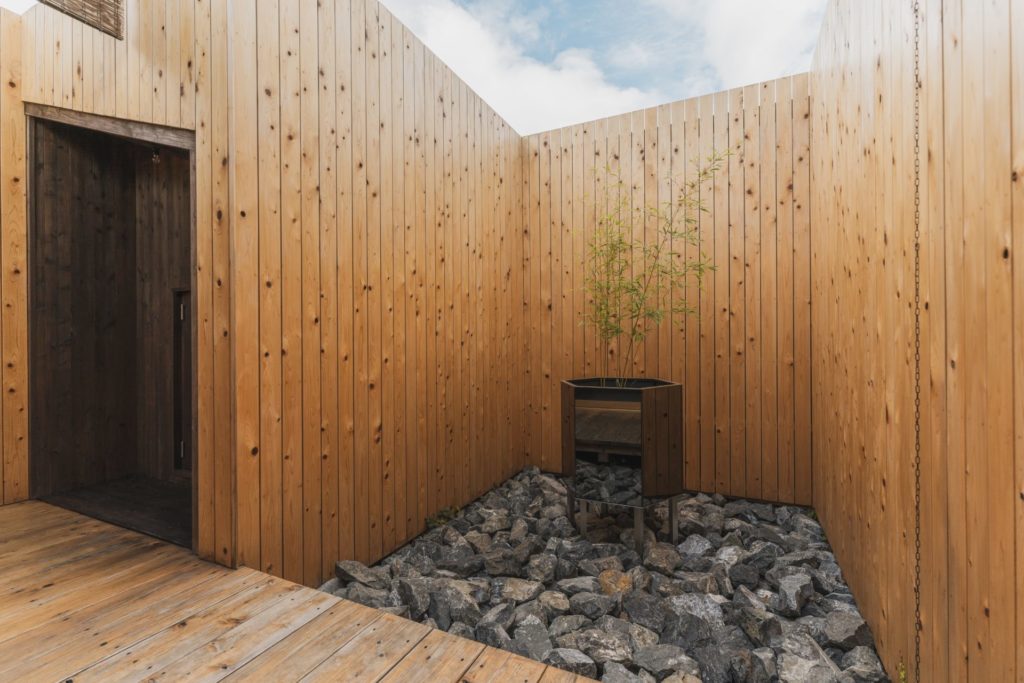
6ishiki (Muishiki) is not simply a place to stay, but a passage into another layer of perception. Born from the transformation of a century-old townhouse in Kameoka, its name invokes the Buddhist idea of the “Six Consciousnesses”—the senses of the body, entwined with the awareness of the mind.
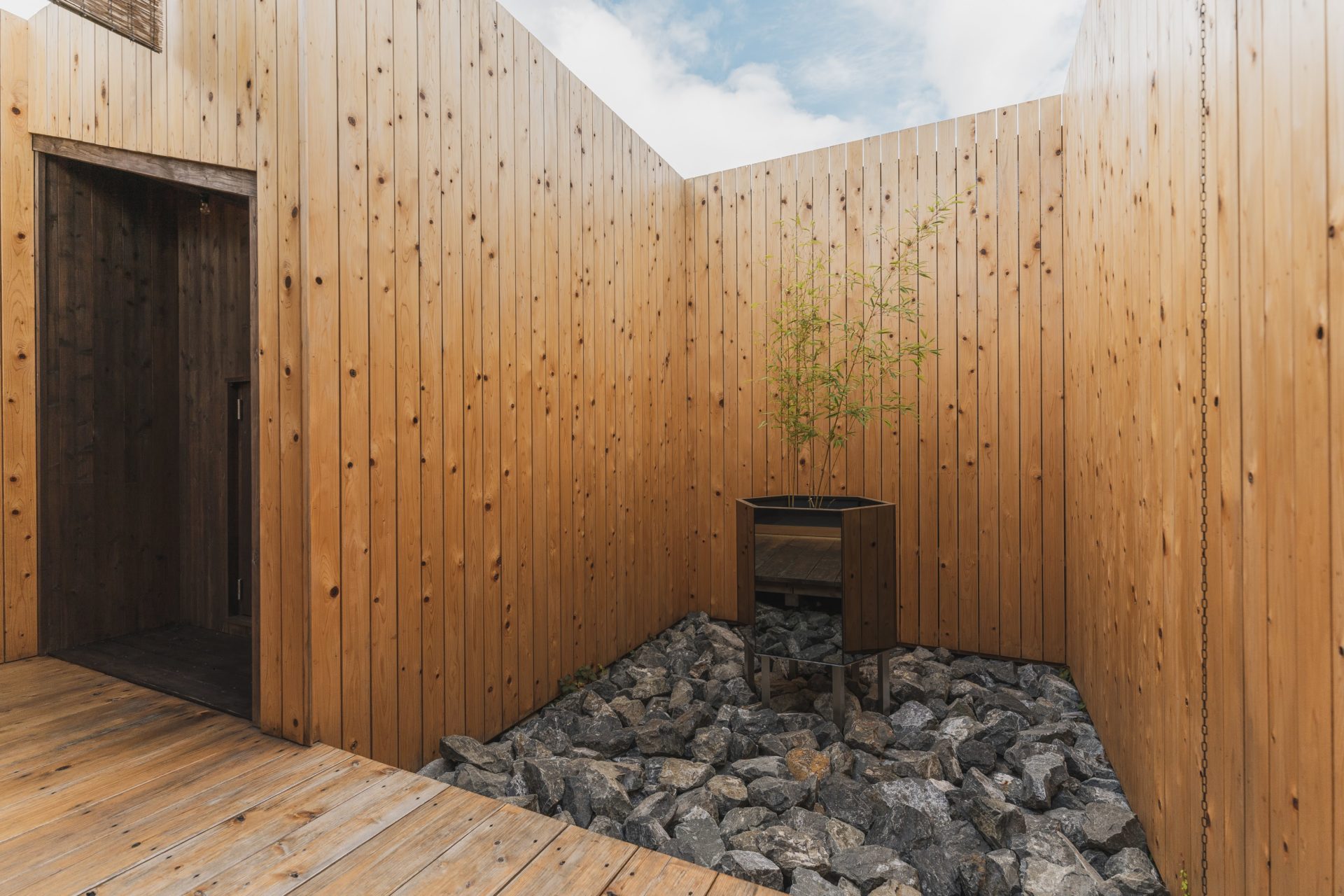
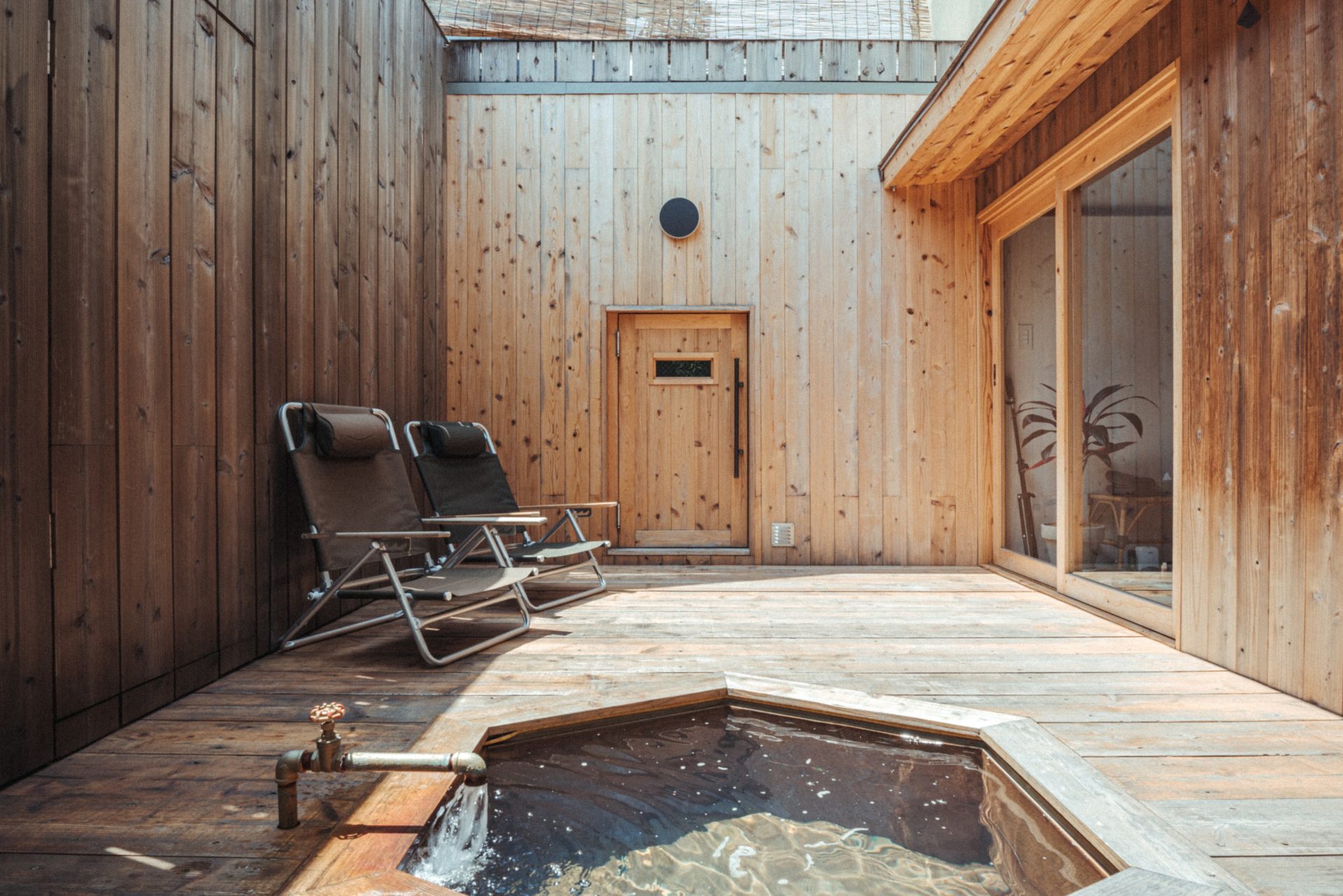
Here, sauna and art converge as parallel rituals of transformation. The rhythm of heat and water reconfigures the body, while art and space awaken subtle vibrations of the soul. Within this dialogue, guests are invited not only to restore themselves, but to enter a state of re-attunement—where the boundaries of self and world blur, and new questions emerge.
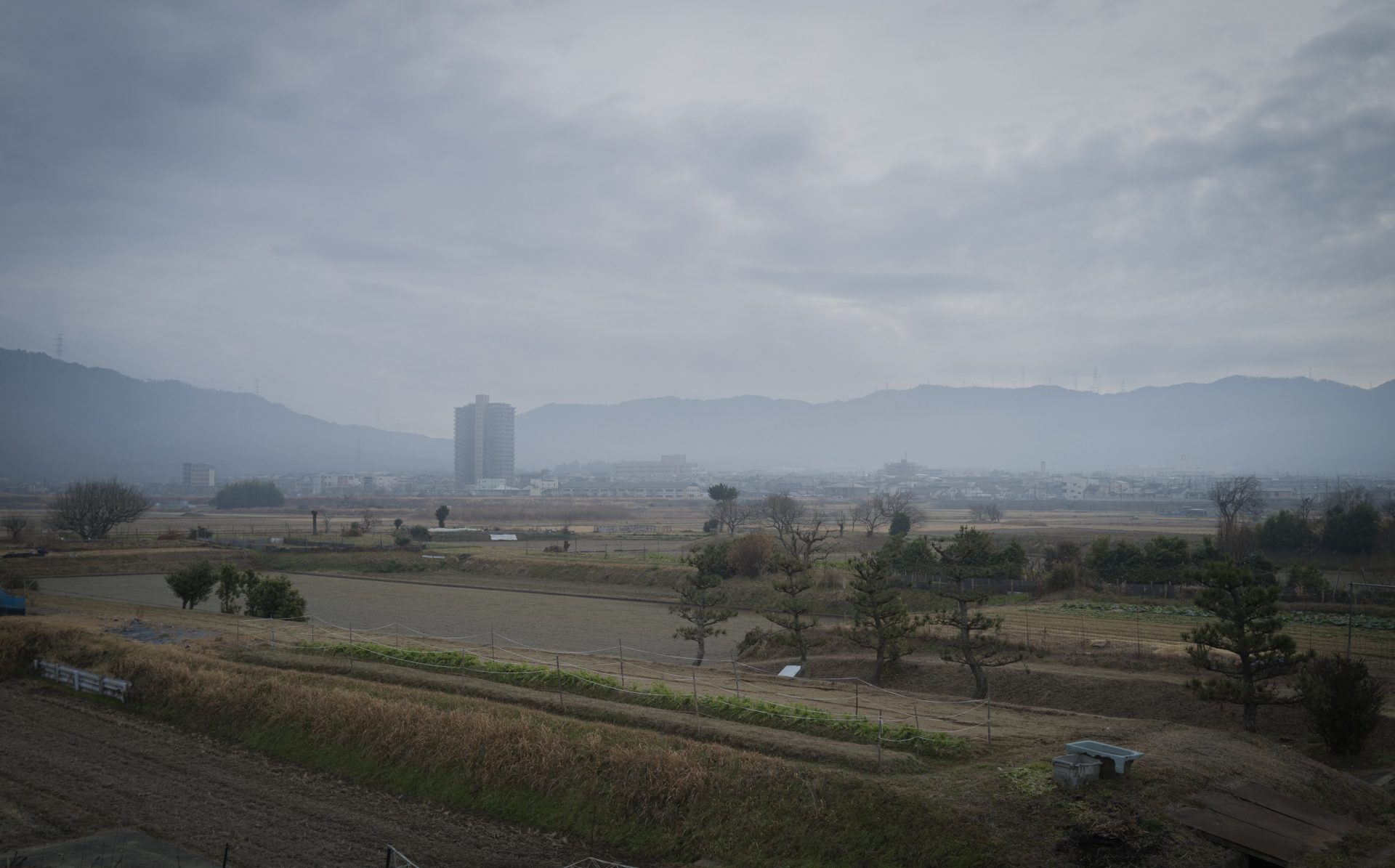
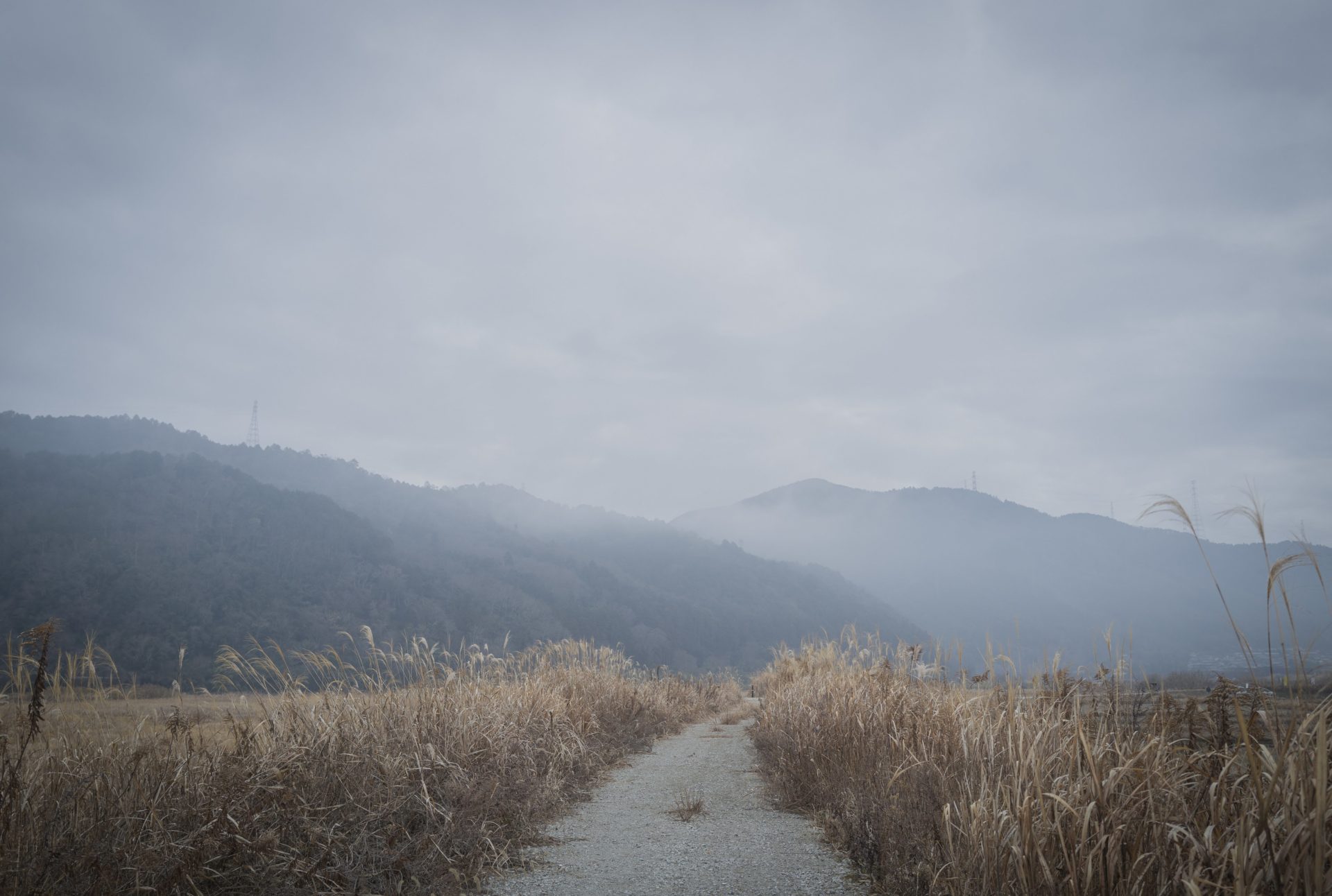
Situated in the mist-laden valley of Kameoka, a landscape where fog becomes a living metaphor for impermanence and renewal, 6ishiki offers more than wellness. It is an experiment in consciousness, environment, and being, crafted as a living artwork.
6ishiki is a site of inquiry—where space, body, and spirit are rewoven, and where hospitality itself becomes an art form.
▶︎6ishiki Official Website
※Micro Happening – Regenerative Place-Making in Fog
no-mu art & meals
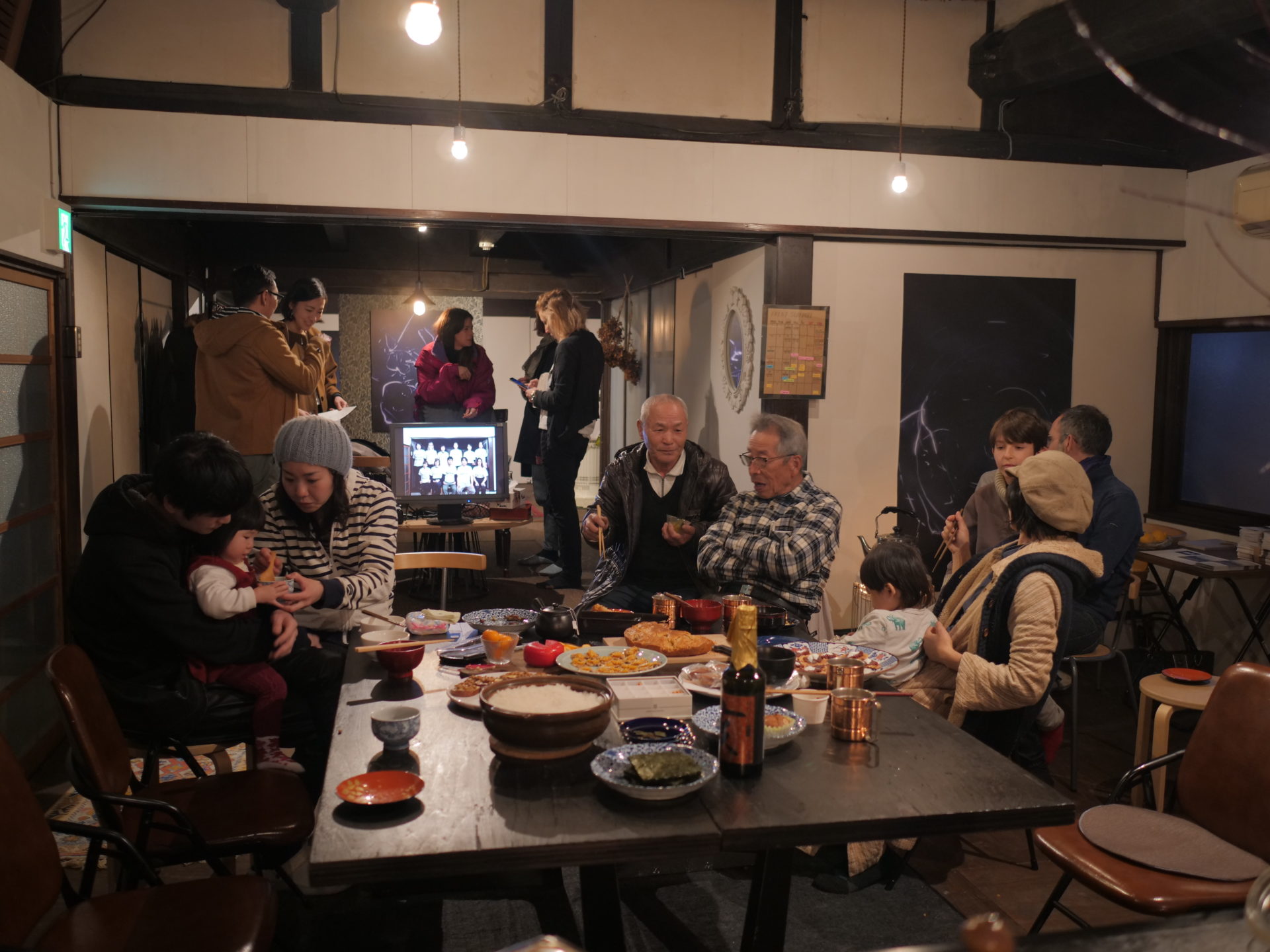
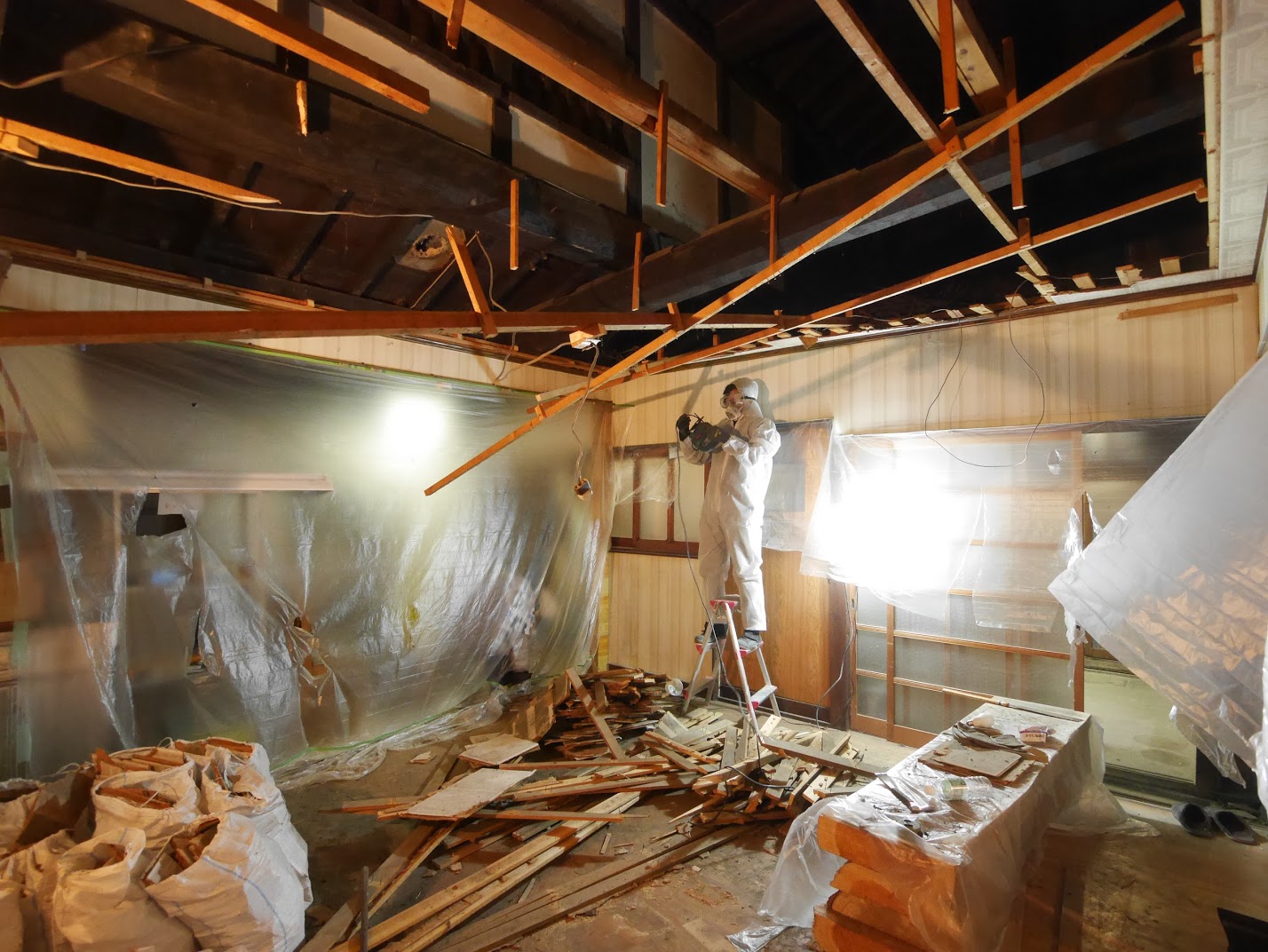
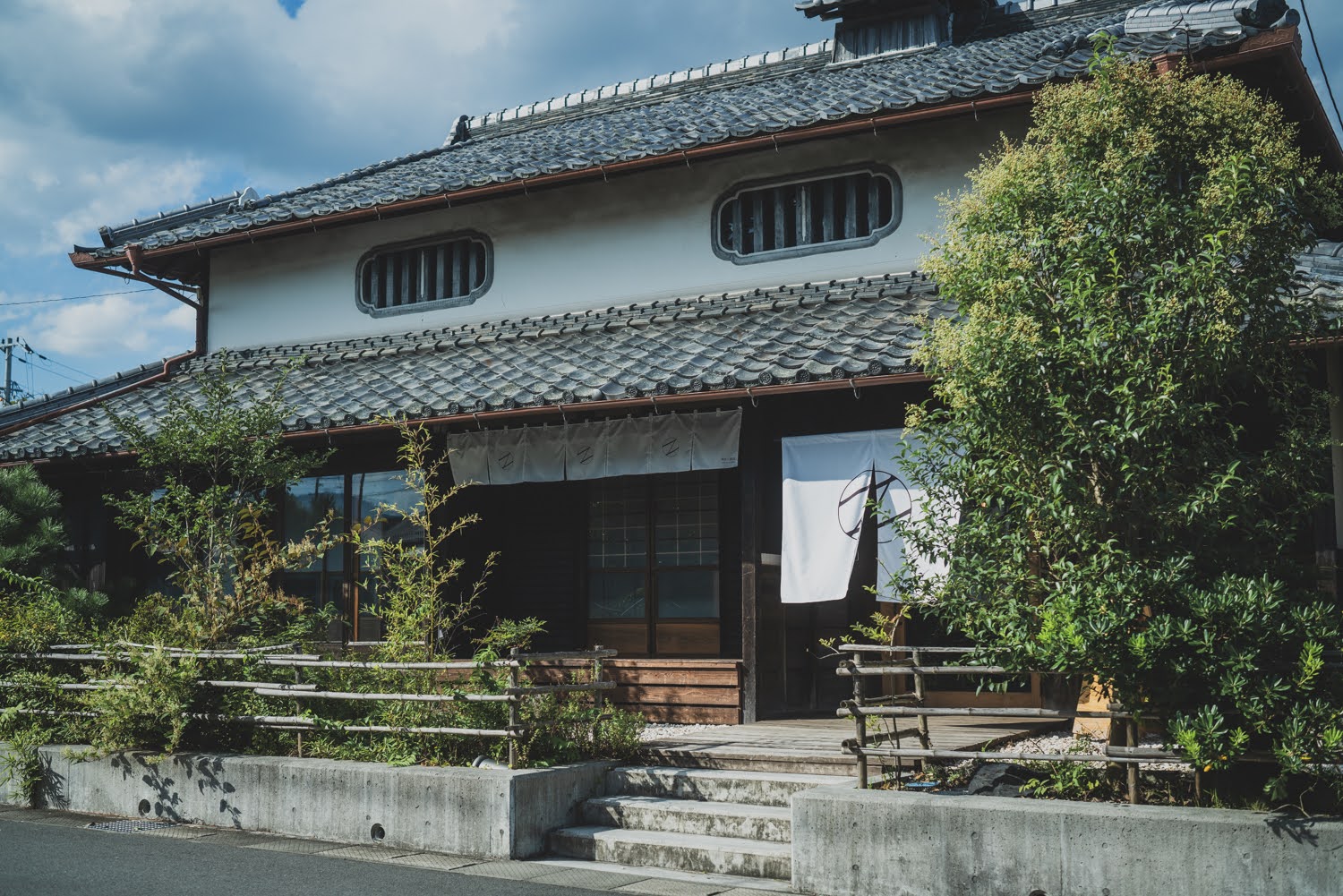
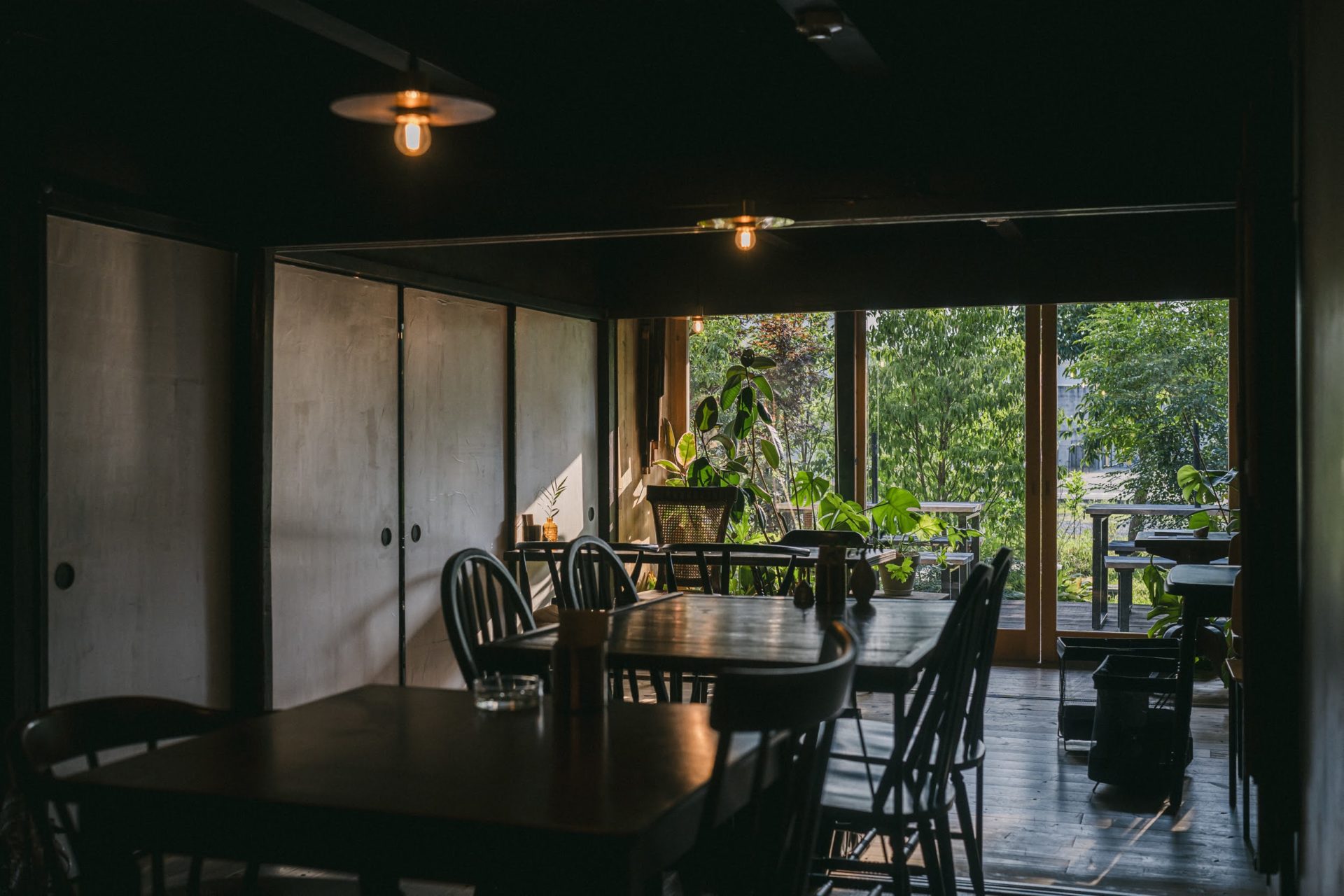
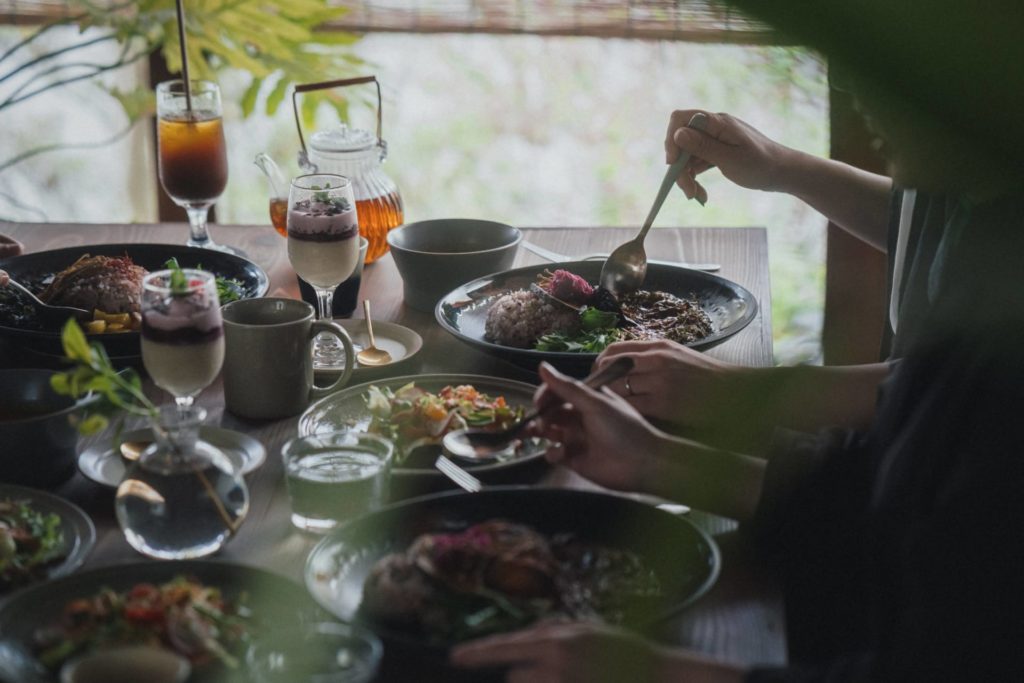
no-mu is a café housed in a 100-year-old traditional townhouse in Kameoka, Kyoto, revitalized through self-renovation. More than a place for dining, it is positioned as a site of artistic practice. The act of transforming the architecture by one’s own hands is itself a creative gesture—unearthing latent cultural resources of the region and reweaving them into new layers of meaning.
The name no-mu is also a play on the Japanese word for dense fog (濃霧, no-mu), a natural phenomenon for which Kameoka is well known. This fog, often seen as a barometer of the local environment, embodies both the climate and the atmosphere of the region, and becomes a metaphorical grounding for the café’s identity.
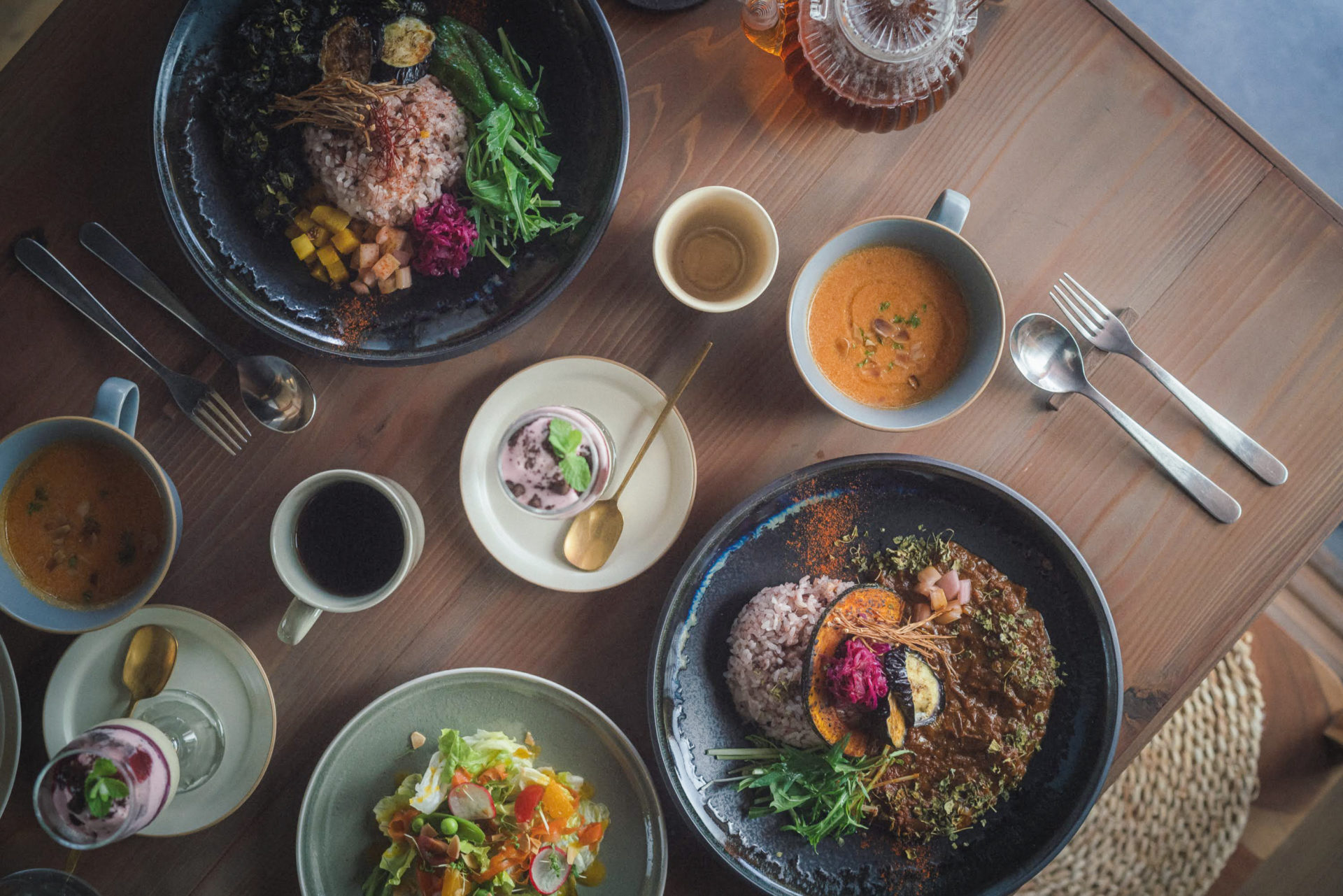
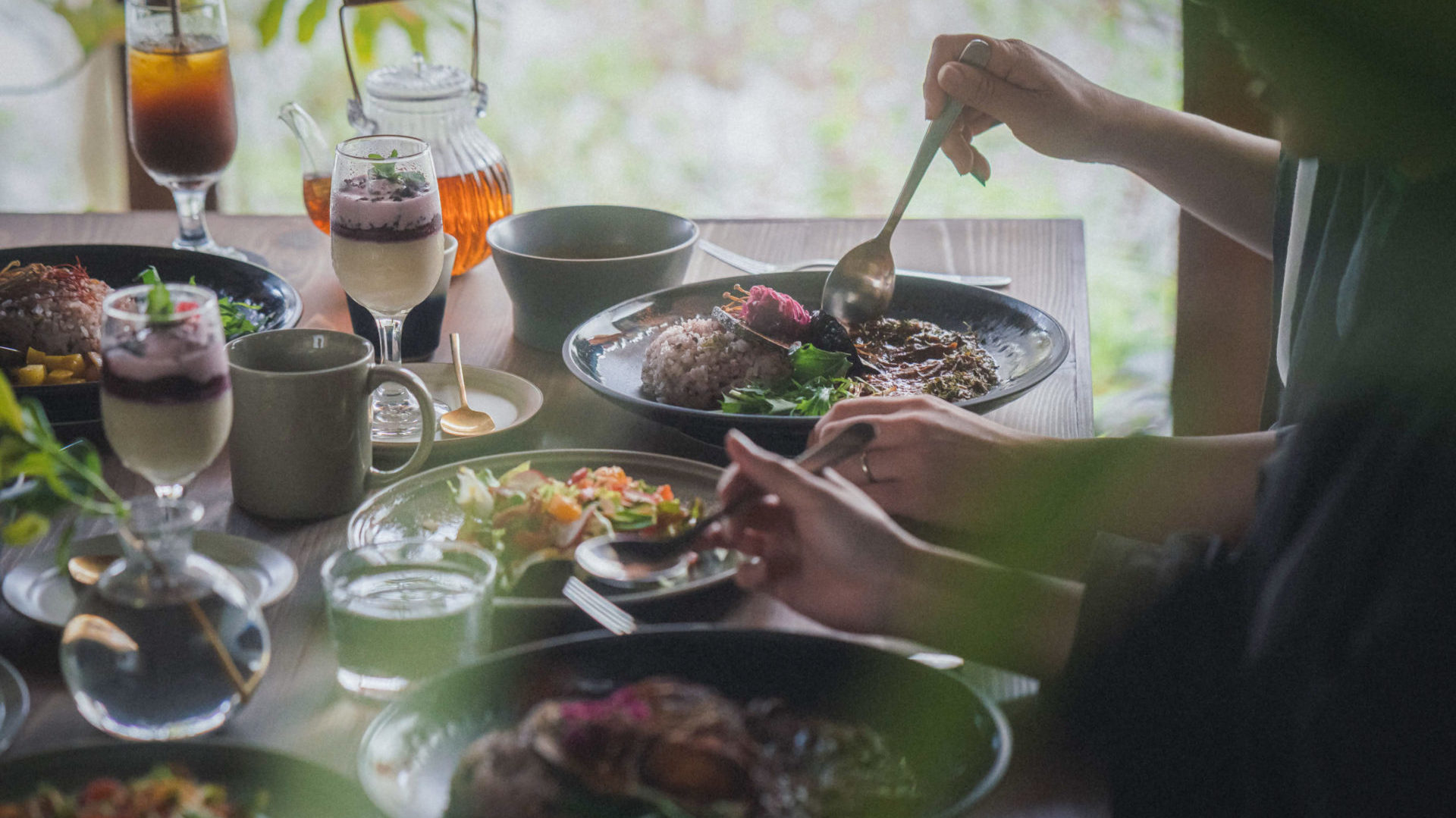
Here, not only are carefully crafted baked goods and an original coffee blend offered, but also menus that respond to vegan and vegetarian perspectives. This approach is an exploration of how food can reconnect diverse forms of embodiment and worldviews. It becomes an artistic implementation of inquiry that engages with questions of bioethics, environmental concerns, and sustainability.
no-mu functions as an experimental ground where the central question—“What constitutes richness in the everyday?”—is continually explored through three axes: space, food, and human relationships. It mediates between the temporalities of the local context and the embodied experiences of individuals, positioning the very act of place-making as a form of artistic practice in society.
Thus, no-mu is at once a café and a site of social experimentation initiated by an artist—a nexus where art and everyday life, economy and ethics, individual and community intersect.
※Micro Happening – Regenerative Place-Making in Fog

JIKI:Kameoka Local Organic Vegetable Project
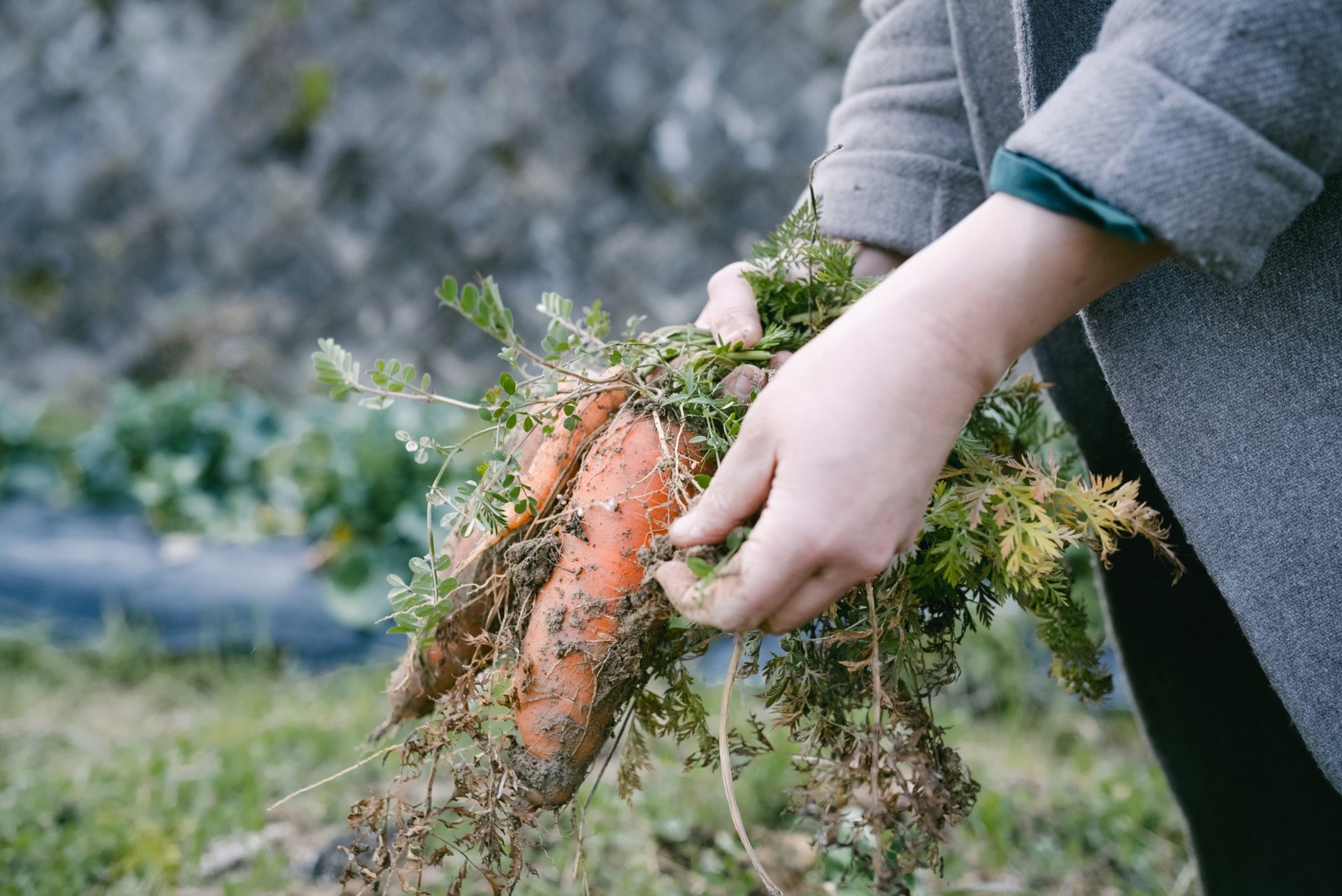
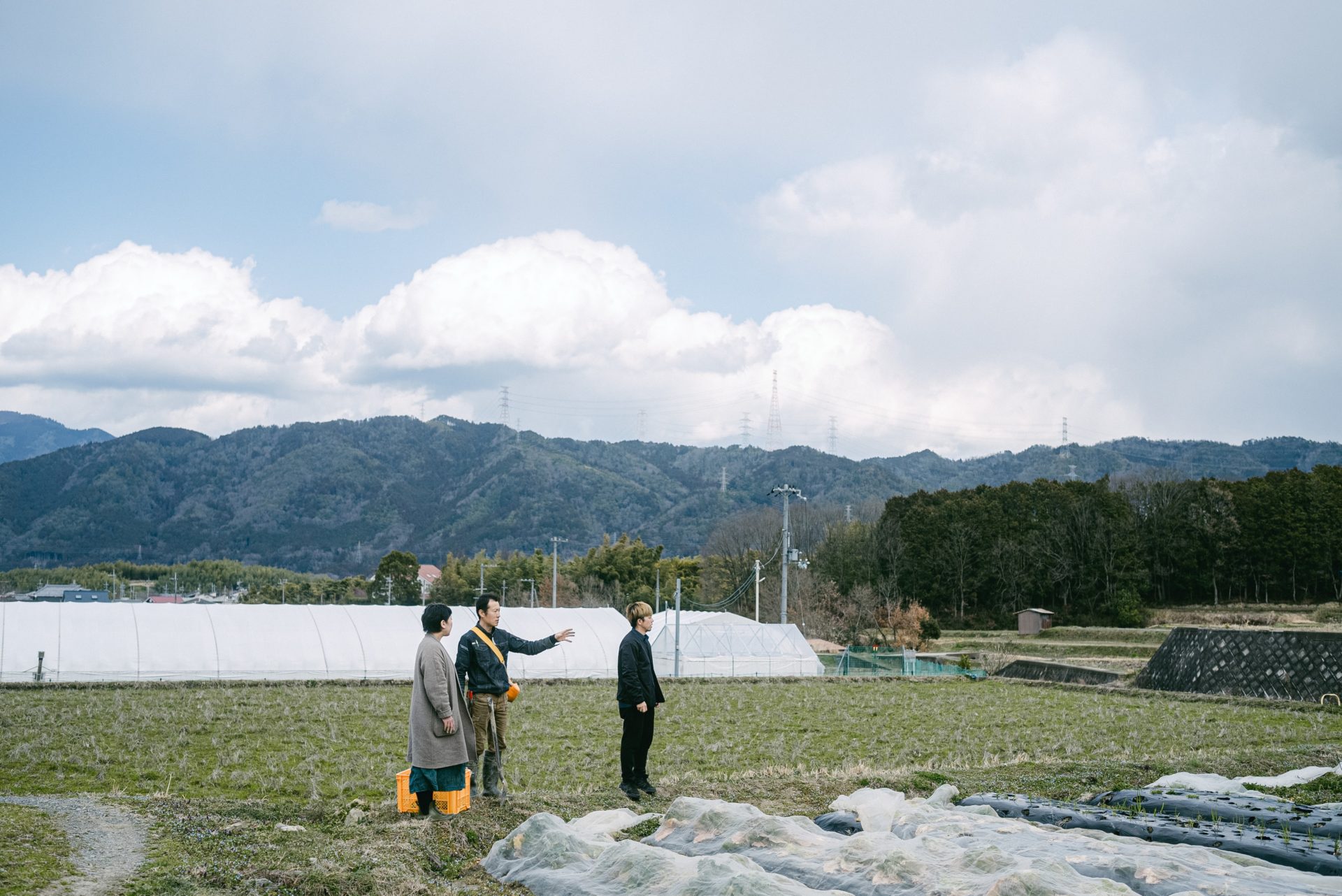
Organic vegetables nurtured by the pure water and fertile soil of Kameoka, Kyoto, can be understood not merely as ingredients, but as mediums that reveal the relationship between land and people.
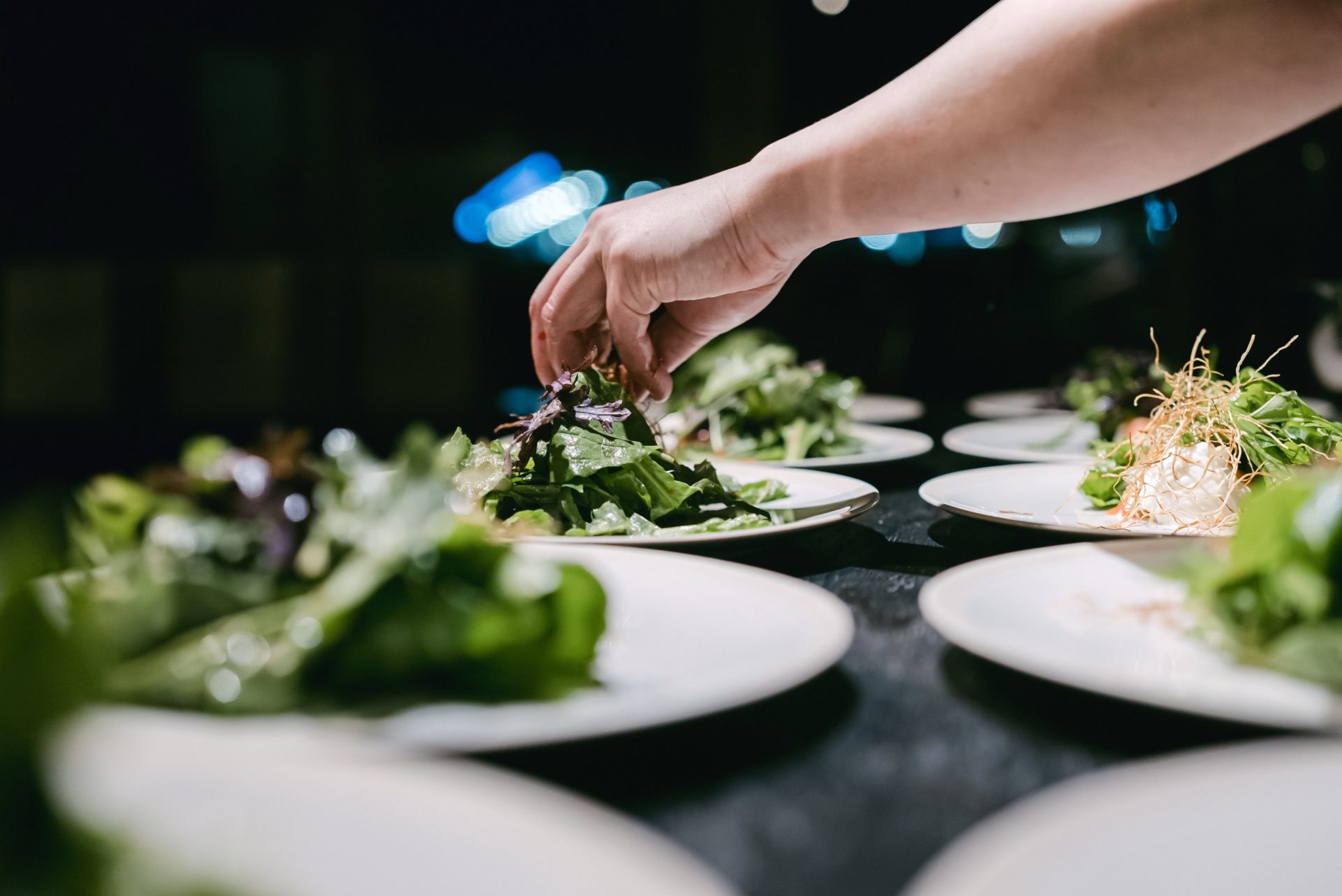
In this project, these vegetables and fruits are prepared with minimal cooking—such as soups and juices—to draw out their natural flavors and deliver them as direct energy to the body. The act of eating seasonal produce resonates with the cycles of nature and becomes a practice of tuning both body and mind.
Here, “food” is not confined to the function of nutrition. It is conceived as an artistic practice that reconnects environment, body, and culture. Rooted in the local climate of Kameoka, this approach reinterprets its gifts and reweaves “time with food” as a way of giving color to the very foundations of life. Within the framework of art thinking, it is an attempt to reconsider the relationship between humans and their environment, and to transform everyday life itself into a site of artistic expression.
JIKI, however, does not pursue this philosophy alone. It aims to grow as a new local brand together with organic farmers and producers of the Kameoka Organic Action. By refining and sharing the power of vegetables rooted in the soil and water of the region, the very process itself becomes an act of reweaving the future of food culture.
※Micro Happening – Regenerative Place-Making in Fog
L.L.A. / Art Thinking by Artists
For me, Art Thinking is not confined to techniques of production or modes of expression. It is a methodology for re-sensing the world and reconfiguring relationships. It is not a mode of thinking aimed at “solutions,” but rather a fundamental attitude grounded in questions such as: “Why does this problem exist here?” and “How can we reframe the question itself?”
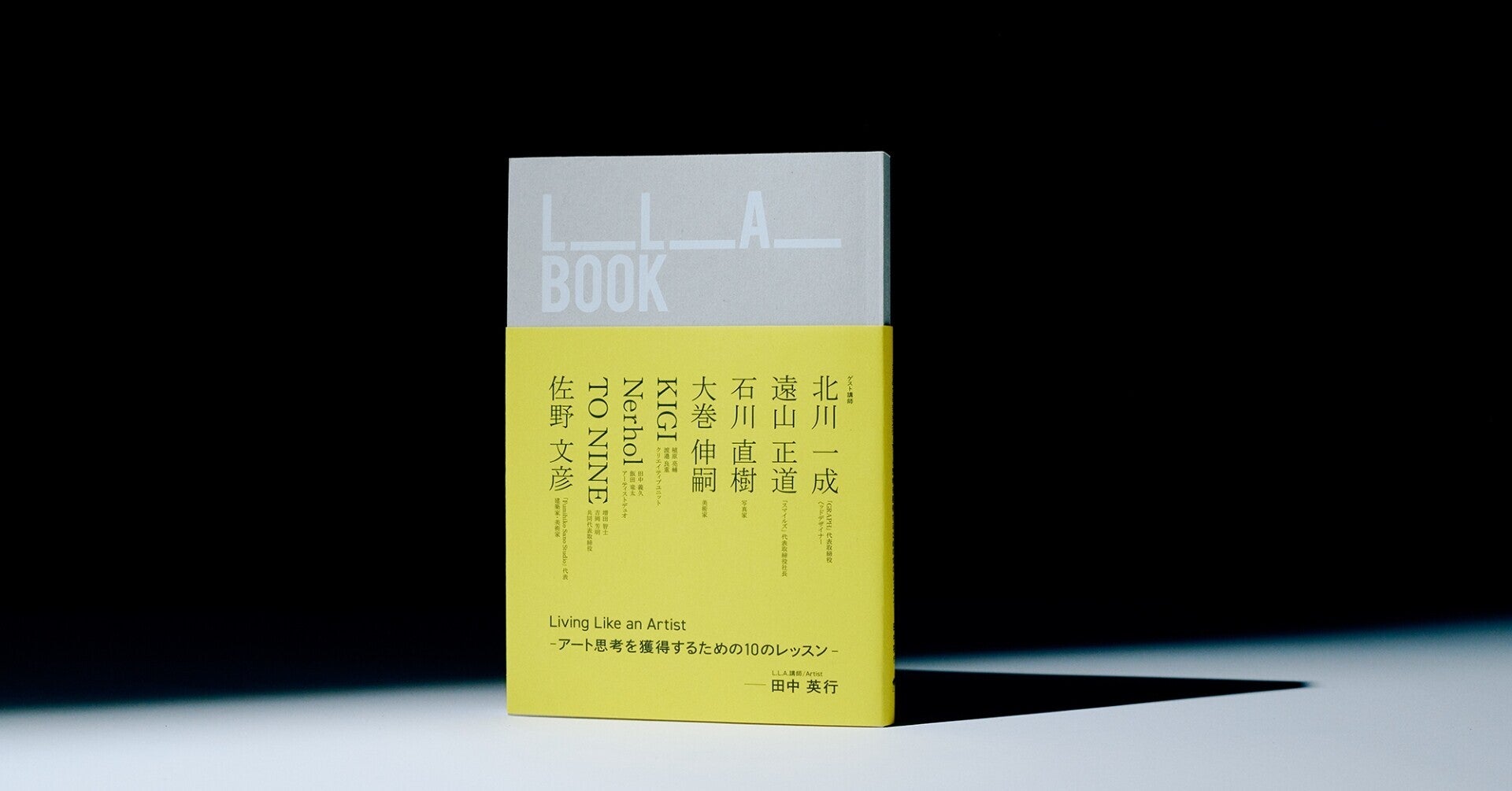
This philosophy is articulated in my book, “LLA BOOK – 10 Lessons for Acquiring Art Thinking.” LLA stands for Living Like an Artist, which does not refer merely to the professional activities of artists, but to a practical concept of understanding one’s way of life itself as art.
At the foundation of this idea lies Andy Warhol’s phrase, “Good business is the best art.” While often interpreted as an irony aimed at capitalist society, I read this statement not simply as Pop Art provocation, but as an invitation to question the boundary between art and business.
When an artist initiates a business from their own standpoint, it is not simply a matter of monetization, but rather an act of generating new value systems within society. I call this practice artpreneurship, and I regard it as an extension of artistic practice itself. For an artist to engage in economy or management does not diminish the purity of art; rather, it expands art’s capacity to transform society.
From this perspective, LLA (Living Like an Artist) is not a privileged mode of existence reserved only for artists, but a framework that opens the possibility for anyone to live their life and work as art. In other words, the value generated through business can also be reinterpreted as an artistic act.
LLA thus functions as a way of thinking that moves fluidly between art and business, individual and society, economy and ethics. It offers a practical platform for embedding art into the fabric of society. And beyond serving artpreneurs, it is presented as a methodology for all people to reimagine and re-create their everyday lives in a more creative way.
▶︎llaschool Official Website
Micro Happening
– Regenerative Place-Making in Fog
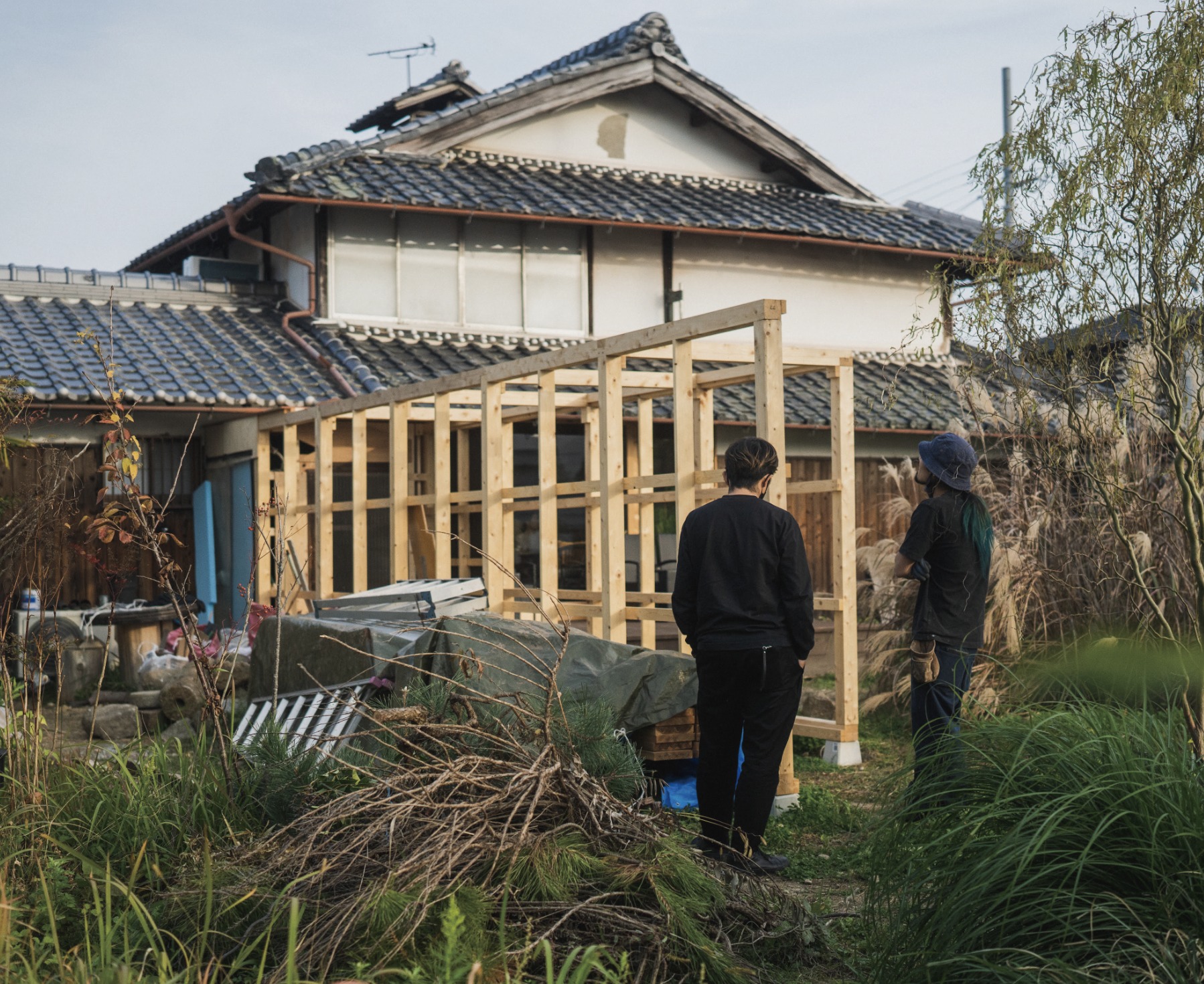
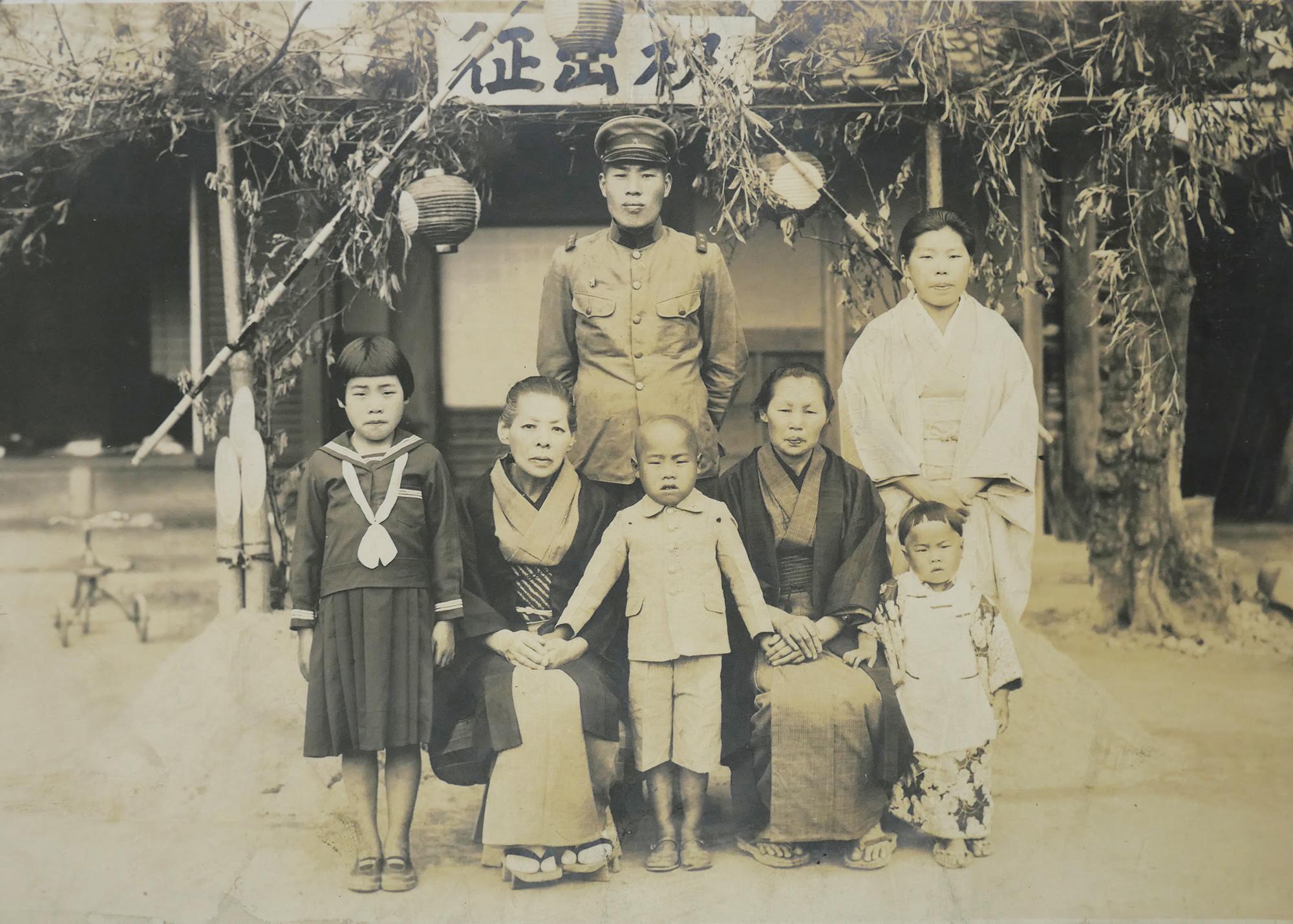
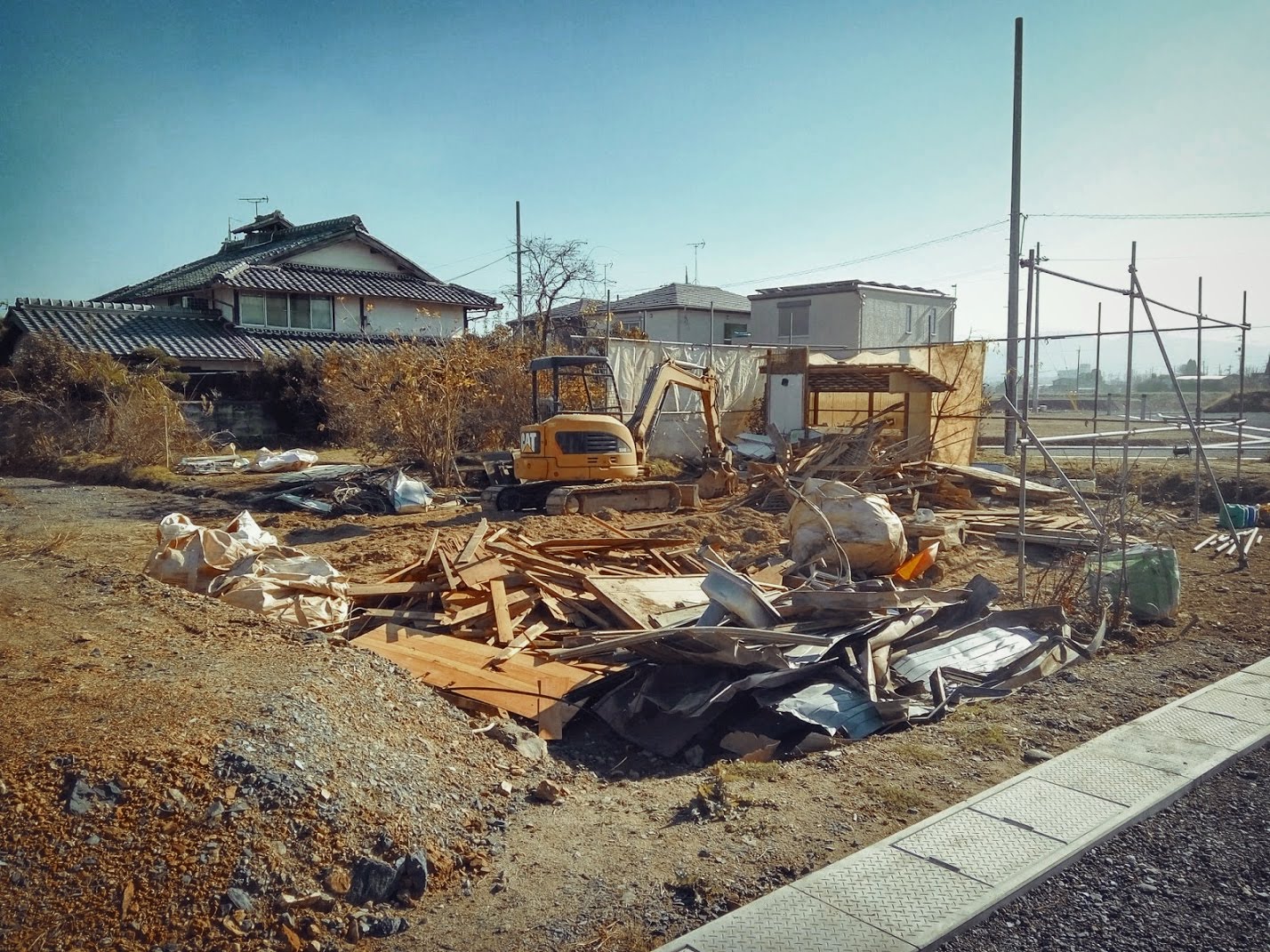
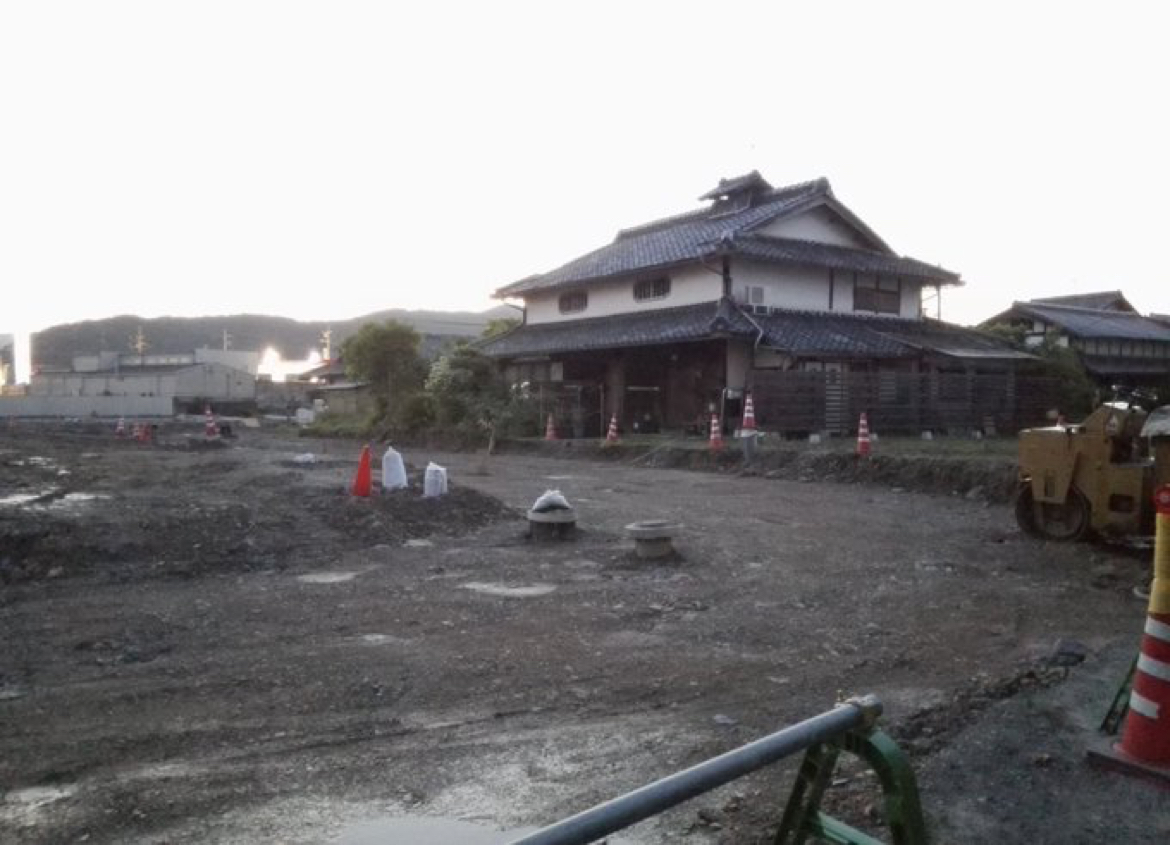
This initiative began with the regeneration of traditional houses and vacant dwellings left behind in an area redevelopment project. It originated from confronting the fate of the artist’s own family house—a century-old townhouse—and a cluster of rental houses once managed by his grandfather. Research into these sites revealed that his ancestors had sustained life in this place for over six centuries, leading to a rethinking of the relationship between land and people across a deep temporal horizon.
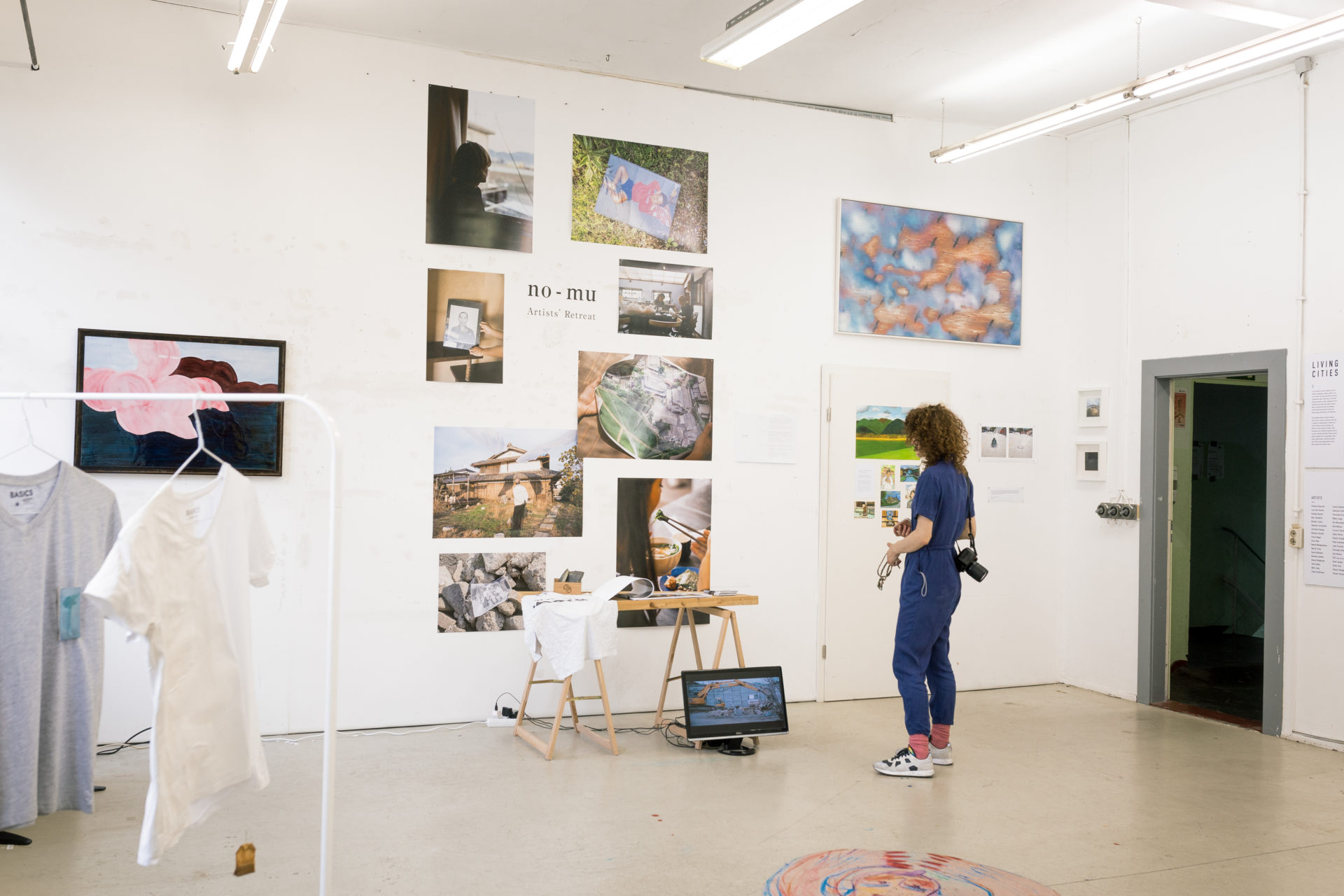
The renewal of these houses was not undertaken as mere architectural repair, but as a process of reweaving relations that extend from the past into the future. As a first step, the artist-in-residence program Micro Happening was organized in 2019 and 2020, welcoming 20 creators—including artists, architects, chefs, and others—from 12 countries and 14 cities. The project sought to draw out subtle shifts within the everyday through artistic practice. Taking the fog of Kameoka—an emblematic phenomenon of the region—as a metaphor for circulation, the project links traditional houses, local crafts, organic farmers, and historic restaurants, expanding into practices that interweave art, food, and hospitality.
At no-mu art & meals, menus crafted from local ingredients—often gluten-free or plant-based—create a meeting ground that connects communities and producers through food. The name “no-mu” derives from the dense fog characteristic of Kameoka, grounding the café’s identity in the climate and cultural atmosphere of the region.
At 6ishiki art & sauna, a century-old townhouse has been renovated into a one-group-per-day accommodation. Programs combine sauna and art to open perception and consciousness, offering visitors an experience of “re-tuning” themselves and their surroundings. Rooted in the climate and landscape of Kameoka, the stay transcends ordinary tourism, cultivating sustained engagement with the region.
The reuse of vacant houses has further generated new enterprises, including artists’ studios, an organic grocery, design offices, and restaurants. Collaborations with local businesses, municipal authorities, and universities have expanded creative circulation across the area. In walking distance, the renovation cluster Project Hamlet has begun, where more than ten houses have been renewed and several creators have taken residence, extending the project’s influence into the wider community.
Such accumulations of small shifts—transforming the everyday (ke) into moments of festivity (hare)—form the core of Micro Happening. Eikoh Tanaka, both artist and entrepreneur, advances these initiatives as an “artrepreneur,” connecting art with local economy, and fostering new value and regenerative cycles within the community.
Looking ahead, a forthcoming lecture series is planned for winter 2025 under the title “Reweaving the World through the Lens of Artrepreneurship.” Spanning five months and including a special edition, the program will bring together practitioners from diverse fields such as art, architecture, agriculture, welfare, and hospitality. Through dialogues and shared practices, it aims to expand the possibilities of artrepreneurship in bridging creativity and economy, offering renewed perspectives on how the world may be reimagined.